
Rise and resist: Women environmental defenders leading change across Asia and the Pacific
Across Asia and the Pacific, women environmental human rights defenders are protecting forests, rivers, coastlines, and Indigenous territories while standing up for the rights of their communities. Their work places them at the intersection of environmental protection, human rights, and climate justice, but it also exposes them to some of the region’s most severe forms of violence and discrimination.
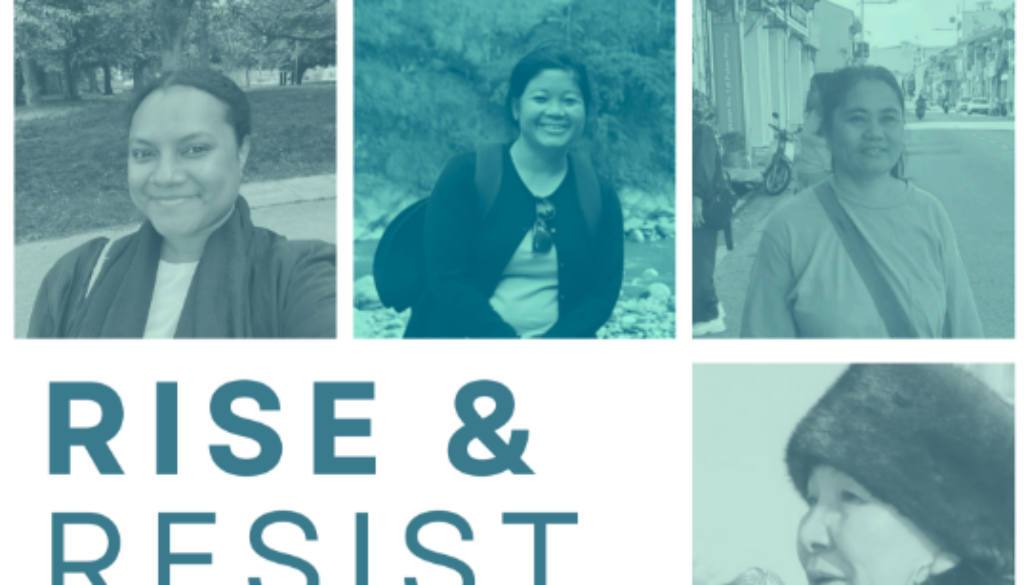
The Asia Pacific Network of Environmental Defenders (APNED), a member of the KALLIED community of practice, has recently published Rise and Resist: Women Leading Environmental and Human Rights Defense in Asia and the Pacific. Through the stories of ten women defenders from Cambodia, Indonesia, India, Nepal, Pakistan, Mongolia, Papua New Guinea, and the Philippines, the publication sheds light not only on the risks these leaders face, but also on the knowledge, resilience, and collective action that sustain their movements.
Their stories emerge from a region already on the frontlines of the climate crisis. Rising temperatures, more frequent disasters, and accelerating environmental degradation are disrupting livelihoods and increasing pressure on communities that depend directly on natural resources. At the same time, expanding extractive industries, large-scale infrastructure projects, and shrinking civic space have created increasingly hostile environments for those who defend land, water, and ecosystems.
Yet the report makes one point abundantly clear: women are not simply victims of these overlapping crises. They are leaders, organizers, educators, and bridge-builders who are shaping more just and sustainable futures.
Across very different national contexts, common themes emerge. Indigenous women, farmers, youth activists, lawyers, and community organizers all describe how environmental degradation is inseparable from broader struggles for social justice, gender equality, and Indigenous rights. For many, defending a river or a forest also means defending cultural identity, livelihoods, and the ability of future generations to thrive.
These struggles are deeply gendered. Women defenders often face the same threats experienced by environmental activists more broadly: criminalization, surveillance, intimidation, arbitrary detention, and physical violence, but they also confront gender-specific attacks designed to undermine their credibility and silence their voices. Online harassment, misogynistic abuse, sexual violence, character assassination, and persistent questioning of their leadership remain common experiences throughout the region.
Several defenders also describe the invisible burdens they carry. Many balance community organizing with caregiving responsibilities while navigating patriarchal norms that continue to limit women’s participation in public decision-making. Rather than recognizing their leadership, communities and institutions often expect women to remain confined to traditional roles.
Despite these barriers, the stories collected by APNED are fundamentally stories of hope and collective action.
In Cambodia, young activists are inspiring a new generation to demand environmental accountability. In Papua, Indigenous women are combining grassroots organizing with digital advocacy to defend both their territories and their communities. In Nepal and India, women leaders continue strengthening Indigenous participation in environmental governance while preserving traditional ecological knowledge. In Pakistan and Indonesia, rural women are protecting seed diversity, food sovereignty, and sustainable farming practices. In Mongolia, legal advocacy has helped strengthen environmental governance and contributed to greater recognition of defenders’ rights. Meanwhile, in Papua New Guinea and the Philippines, women continue organizing despite facing some of the region’s most severe forms of violence and repression.
Although their contexts differ, these women share a common understanding: environmental justice cannot be separated from human rights. Healthy ecosystems depend on communities being able to participate in decisions affecting their lands, access information, seek justice, and organize without fear.
Another important lesson emerging from the publication is that protection cannot focus solely on emergency responses after attacks occur. Women defenders consistently highlight the need for stronger prevention measures, meaningful participation in environmental decision-making, recognition of Indigenous knowledge, gender-responsive protection mechanisms, and greater accountability for those responsible for attacks.
Their experiences also demonstrate that solidarity matters. Community networks, grassroots organizations, regional alliances, and international partnerships provide not only practical support but also spaces for learning, collective care, and shared advocacy. These connections help defenders continue their work even in contexts of increasing political pressure.
For KALLIED, these stories reinforce a lesson that resonates across our community of practice: protecting environmental defenders requires understanding the complex realities they face. Environmental conflicts are rarely only about nature but they are also about democracy, inequality, governance, and human rights. Women defenders stand at the intersection of these issues, offering leadership rooted in community knowledge, collective action, and long-term care for both people and ecosystems.
Rise and Resist is therefore more than a collection of inspiring stories. It is a call to recognize women environmental defenders as indispensable leaders in addressing the climate crisis and advancing environmental democracy. Their voices remind us that protecting the environment also means protecting the people who defend it.