
Collective Power: What Global Witness’ 2026 Report Reveals About the Struggle to Protect Environmental Defenders
Global Witness’ new report, Collective Power: The Struggle for Protection for Land and Environmental Defenders, documents the continued violence faced by people and communities defending land, territories and the environment. Published on 16 September 2026, the report records 124 land and environmental defenders killed in 2025, bringing the total number of documented killings and disappearances since 2012 to 2.375.
While the number of killings recorded in 2025 was lower than in previous years, Global Witness cautions against interpreting this as evidence of a meaningful decline in violence. Many cases remain unreported or impossible to verify, particularly in contexts of armed conflict, repression and shrinking civic space. At the same time, defenders increasingly face an “iceberg” of non-lethal attacks, including criminalisation, threats, surveillance, intimidation and smear campaigns, often amplified through social media.
Land conflicts remain at the centre of the violence
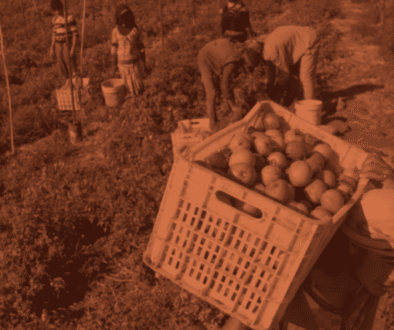
One of the report’s clearest findings is the central role of territorial disputes. More than half of the killings documented in 2025 were linked to land conflicts, highlighting how unresolved land claims and insecure tenure can create conditions for violence against defenders and their communities. Extractive industries also remain a significant driver: mining was linked to 11 killings, while logging was associated with eight and agribusiness with six. The burden is particularly concentrated among Indigenous and peasant communities. Together, Indigenous peoples, peasants and Afro-descendant communities accounted for more than three quarters of the defenders killed in 2025. Seven Indigenous defenders were members of Indigenous guards protecting their territories, with five of those cases showing links to organised crime.
Latin America remains at the centre of the crisis
Latin America accounted for 85% of the killings documented globally in 2025. Colombia recorded 39 killings, Brazil 26, while Honduras and the Philippines each recorded 12. Across the region, Global Witness identifies overlapping pressures involving land conflicts, extractive projects, organised crime, corruption and weak or inadequate protection mechanisms. The report also illustrates how state responses can compound these risks. In several countries, defenders face criminalisation or restrictions on civic space alongside physical threats. In Mexico, for example, the number of documented killings fell in 2025, while Mexican organisation CEMDA recorded 107 cases of criminalisation and hundreds of instances of stigmatisation, intimidation and defamation.
From individual protection to collective power
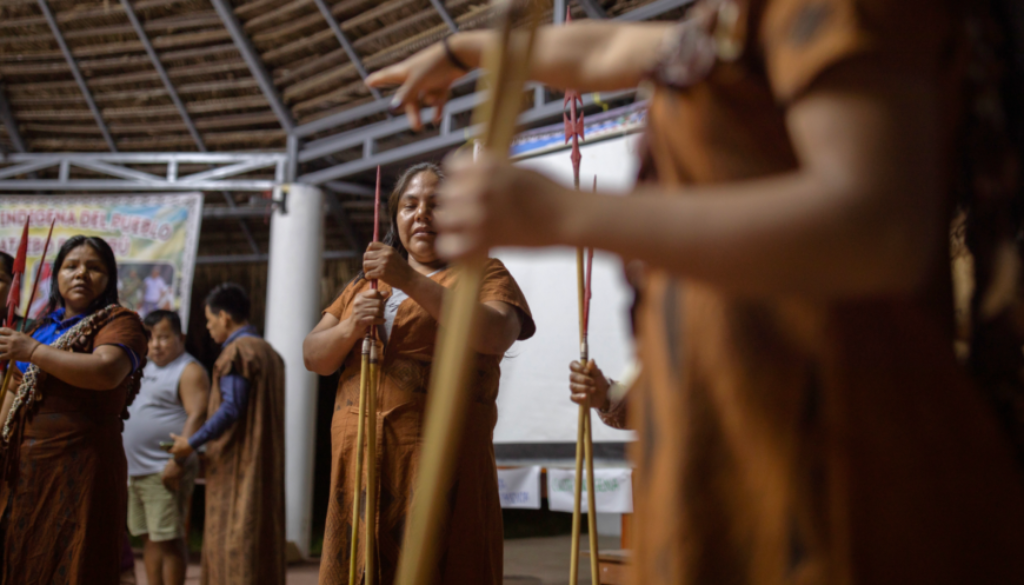
Perhaps the report’s most important contribution is its emphasis on collective protection. Existing protection mechanisms often focus on individual defenders and respond only after threats have emerged. Yet the experiences documented by Global Witness show that communities are developing their own collective systems of protection in response to threats that are territorial, political and collective in nature. In Peru, for example, the Kakataibo people established the Indigenous Guard of the Kakataibo People in response to increasing deforestation, illegal coca cultivation and organised crime. The initiative has grown to more than 150 members across ten communities, combining territorial monitoring, community decision-making and engagement with state institutions.
These experiences point to a broader lesson: protecting environmental defenders cannot be reduced to protecting individuals. It also requires protecting the territories, organisations, networks and collective infrastructures that make environmental defence possible. This perspective reinforces the importance of understanding protection not only as a security response, but as a collective process rooted in communities and territories. As environmental defenders confront increasingly interconnected forms of violence, from physical attacks and criminalisation to digital harassment and the pressures generated by extractive and infrastructure projects, their own strategies of organisation, solidarity and collective action are an essential part of the protection landscape. The report ultimately calls attention to a central challenge: ensuring that those who defend land and the environment are not left to protect themselves alone, while recognising and strengthening the collective capacities they have already built.
From collective protection to collective knowledge
The findings of the Global Witness report also resonate with the work of the Knowledge Alliance for Environmental Defenders (Kallied), which brings together organizations and initiatives across the Global South to strengthen knowledge, collaboration and strategies for environmental defenders. From this perspective, protection cannot be understood only as a response to individual threats. It also requires investing in the collective capacities, knowledge systems, networks and strategies that communities and organizations have developed to defend their territories.
As Global Witness’ report makes clear, the risks faced by environmental defenders are increasingly complex and interconnected. Responding to them therefore requires more than emergency measures: it requires sustained support for the collective infrastructures that make territorial defense possible. Strengthening those capacities, and ensuring that they remain defined by the communities themselves, is an essential part of building more effective and lasting forms of protection.