Beyond participation: What the Hamburg Sustainability Conference means for environmental democracy in the Global South
As global leaders gather at the 2026 Hamburg Sustainability Conference (HSC), discussions will inevitably focus on strengthening international cooperation, mobilizing finance, and accelerating progress toward the Sustainable Development Goals. These conversations are essential. Yet for many organizations and communities across the Global South, another question deserves equal attention: who gets to shape sustainability decisions, and under what conditions?
The conference takes place at a particularly challenging moment. Climate impacts are intensifying, biodiversity loss continues at an alarming pace, fiscal pressures are limiting governments’ room for action, and civic spaces are shrinking in many countries. The HSC acknowledges these overlapping crises by emphasizing resilient economies, stronger international cooperation, and new partnerships capable of translating global commitments into practical solutions. But partnerships alone are not enough. Sustainable development depends on the quality of governance that enables those partnerships to succeed.
Environmental democracy provides that missing dimension.
Too often, sustainability debates focus on technological innovation, climate finance, or investment mechanisms while overlooking the democratic foundations required to make these solutions effective. Access to environmental information, meaningful public participation, and access to justice are not complementary principles, they are prerequisites for durable environmental policies.
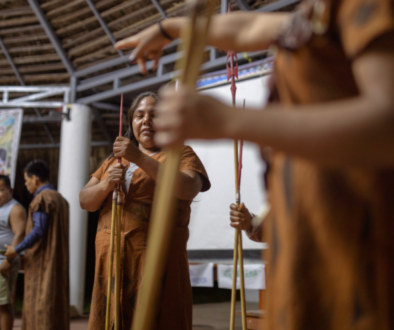
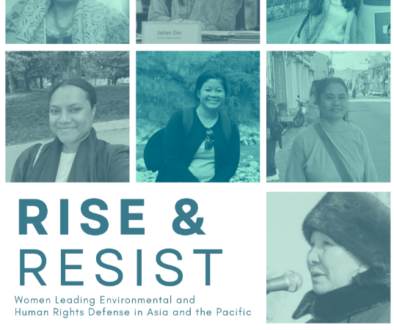
Across the Global South, environmental defenders, Indigenous Peoples, local communities, researchers, and civil society organizations continue to generate innovative responses to climate and environmental challenges despite operating under increasingly difficult circumstances. Many face political polarization, limited institutional capacity, financial constraints, or even personal risks. Yet these actors frequently produce some of the most context-sensitive and socially legitimate solutions available.
This raises an important question for international forums: are they creating space for these experiences to influence global agendas, or are they primarily asking local actors to implement solutions designed elsewhere?
The answer matters because sustainability cannot simply be transferred across contexts. Policies that work in one region may fail in another if they ignore local institutions, social dynamics, or environmental realities. Genuine cooperation therefore requires moving beyond consultation toward shared agenda-setting, where knowledge flows in multiple directions.
Networks such as KALLIED demonstrate the value of this approach. By connecting practitioners, researchers, and civil society organizations working on environmental democracy across the Global South, the network helps transform local experiences into shared learning. These exchanges strengthen not only individual organizations but also collective capacity to influence regional and global discussions.
Southern Voice has long argued that evidence generated in the Global South should play a greater role in shaping international policy debates. This perspective is particularly relevant as sustainability challenges become increasingly interconnected. Climate change, environmental governance, social inclusion, and democratic participation cannot be addressed through isolated policy interventions. They require integrated responses informed by those living these realities every day.
For environmental defenders, this conversation is especially urgent. Around the world, they continue to face growing pressures while protecting ecosystems that provide global public goods. Their work highlights an often-overlooked reality: environmental protection is inseparable from democratic governance. Without transparent institutions, accountable decision-making, and safe civic participation, sustainability initiatives risk reinforcing existing inequalities instead of reducing them.
The Hamburg Sustainability Conference offers an opportunity to move this conversation forward. Not because it alone will solve these structural challenges, but because it brings together governments, international organizations, businesses, researchers, and civil society at a moment when trust in multilateral cooperation is being tested.
The success of these conversations should not be measured solely by the number of new partnerships announced or declarations adopted. It should also be assessed by whether they expand the space for locally generated knowledge, strengthen civic participation, and recognize environmental democracy as a cornerstone of sustainable development.
As Asuntos del Sur joins the conference, we see this as an opportunity to contribute perspectives grounded in the lived experiences of Kallied. Building resilient societies requires more than technical solutions, it requires inclusive institutions capable of ensuring that those most affected by environmental decisions are also able to shape them.
If sustainability is to be truly global, then environmental democracy must move from the margins of international discussions to their very center.