
Facing the Climate Crisis: Honduras Calls for Urgent Action on Risk and Resilience
In 2025, Honduras ranks as the third most climate-vulnerable country in the world, following only Dominica and China. This small Central American nation finds itself at the crossroads of escalating environmental threats and a mounting urgency to protect civic space and promote climate justice. Through the «Aporto Project: Civic Space and Climate Justice in Central America,» coordinated by the Red de Desarrollo Sostenible-Honduras (RDS-HN), local actors are sounding the alarm: Honduras needs a long-term, science-based climate strategy—one that is inclusive, preventive, and resilient.
A Country on the Frontlines of Climate Risk
Over the past several decades, Honduras has been hit by over 220 extreme weather events—tropical storms, hurricanes, floods, and droughts—that have claimed around 35,000 lives and caused economic losses between USD 15–18 billion. The devastating hurricanes Eta and Iota alone accounted for damages worth over 53 billion Honduran lempiras. These figures do not just reflect environmental impacts; they paint a stark picture of deepening poverty, rising food insecurity, and widespread ecological degradation.
Despite a relatively wet and cool dry season in early 2025—an anomaly that may mislead the public into thinking climate risks are diminishing—scientific consensus makes clear: climate change is intensifying. It is a threat that must be addressed proactively, not reactively, and certainly not with short-term or rhetorical measures.
Five Key Climate Challenges in Honduras
The RDS-HN outlines five major arguments for urgent climate action:
- Extremely High Climate Vulnerability
Honduras’ position as the third most climate-vulnerable country in 2025 is based on a comprehensive global risk index that considers the number and intensity of weather events, fatalities, economic losses, and the proportion of GDP affected. These are not abstract metrics; they reflect lived realities of communities losing homes, livelihoods, and lives. - Hurricane Exposure and Intensification
Geographically, Honduras lies along the Atlantic hurricane corridor, where rising sea temperatures, shifting winds, and high humidity contribute to increasingly frequent and intense storms. Historical data shows that around 70% of Atlantic hurricanes pose a direct threat to Honduras. Since Hurricane Mitch in 1998, the country has experienced a disproportionate number of high-intensity storms, underlining its chronic exposure. - Escalating Wildfires and the Expanding Dry Corridor
The so-called corredor seco or dry corridor—a zone of chronic drought and water stress—is expanding at a rate of 1.5% annually. By 2040, up to 70% of Honduran territory could fall within this zone, affecting water availability and reducing agricultural and livestock productivity by nearly 20%. Meanwhile, the 2024 dry season saw 3,000 wildfires and the loss of 220,000 hectares of forest. Even though wildfire activity has decreased in 2025 due to unseasonal rains, experts warn that such reductions are not the result of effective management but rather temporary weather patterns. - Devastating Socioeconomic Impacts
Climate-related disasters have led to the highest mortality rates in the region and exacerbated structural inequalities. Around 1.9 to 3.2 million people in Honduras face food insecurity each year, much of it directly linked to climate disruptions. The environmental crisis is a multiplier of existing injustices, especially for rural and Indigenous communities whose access to water, food, and land is increasingly precarious. - A Potentially Severe 2025 Hurricane Season
Forecasts from Colorado State University and North Carolina State University predict an above-normal hurricane season in the Atlantic, with up to 17 named storms, including 3–4 major hurricanes (category 3 or higher). Although ENSO conditions (El Niño/La Niña) are expected to remain neutral—potentially offering more regular rainfall—this still demands coordinated, science-based support for agricultural and livestock sectors to take full advantage of the opportunity.
A Call for a Transformative Climate Strategy
What Honduras needs now is not just emergency response capacity but a comprehensive national strategy for climate risk management. The RDS-HN proposes a vision that is long-term, grounded in science, and inclusive of all sectors of society. This means:
- Investing in early warning systems, modeling, and data-driven decision-making;
- Strengthening the resilience of ecosystems and vulnerable communities;
- Supporting the agricultural sector with technology, training, and adaptation funding;
- Promoting cross-sectoral collaboration between civil society, government, and academia.
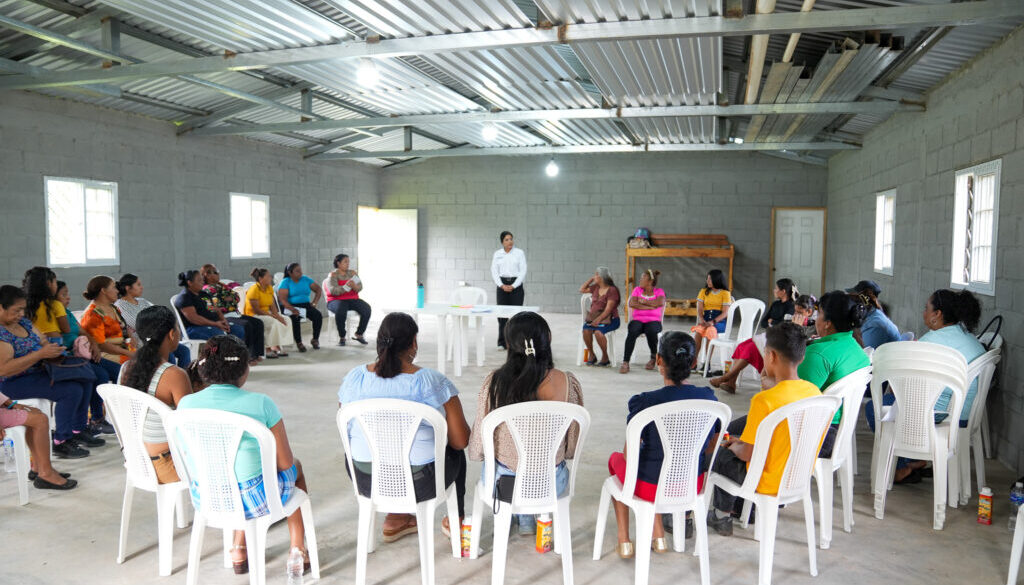
Importantly, this vision connects the protection of civic space with the broader climate agenda. In contexts of high vulnerability, civic participation is not a luxury—it is essential for resilience. Community voices must be at the center of planning, implementation, and accountability processes.
The Role of Regional Solidarity
The Honduran case reflects broader regional patterns across Central America, where climate change intersects with political fragility, migration pressures, and shrinking civic space. Initiatives like the Aporto Project play a key role in fostering regional dialogue and coordinated action. By documenting evidence, promoting knowledge exchange, and advocating for transformative solutions, networks like RDS-HN are helping to build the foundations for environmental democracy in a time of crisis.
Toward Climate Justice
At its core, the climate crisis in Honduras is a justice issue. Those least responsible for emissions are paying the highest price. Addressing this imbalance requires more than technical fixes—it demands systemic change, inclusive governance, and international solidarity.
The time to act is now. Honduras, like many countries on the frontlines, cannot afford further delay.