
Transitioning Away from Fossil Fuels: Why the First Global Conference Matters
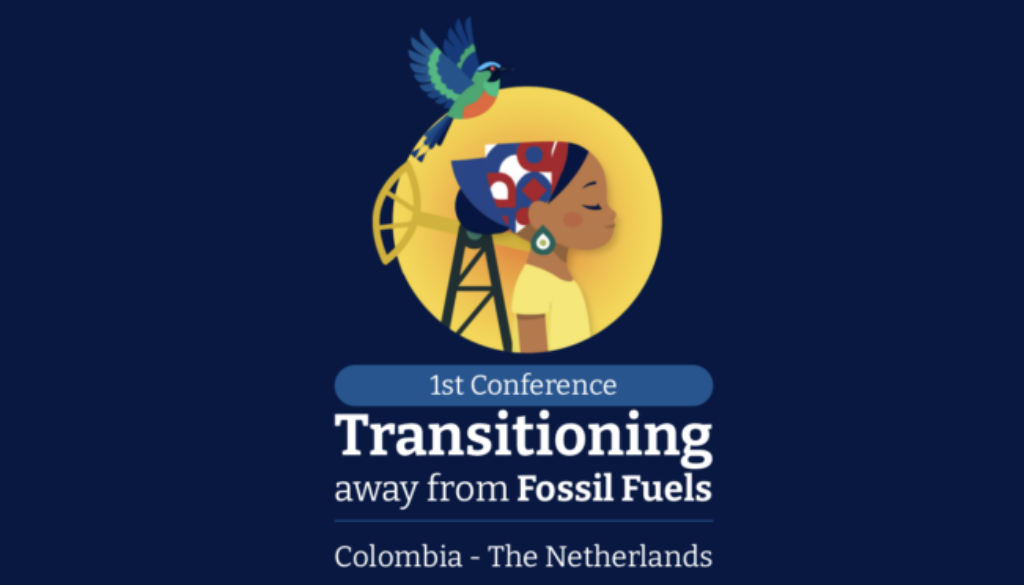
In late April 2026, policymakers, researchers, and civil society actors will gather in Santa Marta, Colombia, for the First International Conference on Transitioning Away from Fossil Fuels. Co-hosted by the governments of Colombia and the Netherlands, the meeting represents the first global conference specifically dedicated to discussing how the world can move away from oil, gas, and coal extraction in a coordinated and equitable way.
The timing of this conference is not accidental. In recent years, global climate negotiations have struggled to reach consensus on how (and how quickly) fossil fuels should be phased out. At the 2025 UN climate conference (COP30) in Belém, for example, negotiations ended without a clear agreement on a roadmap to phase out fossil fuels, highlighting deep divisions among countries. Against this backdrop, the Santa Marta conference aims to provide a complementary space for governments and other stakeholders willing to move forward on this issue. The event will focus on identifying practical pathways for a just, orderly, and equitable transition away from fossil fuel extraction, aligned with global climate goals and scientific evidence.
A new diplomatic space for climate action
The conference is expected to bring together national governments, subnational authorities, international organizations, and civil society groups to advance cooperation on strategies to reduce and eventually phase out fossil fuel production.
Importantly, the discussion will not only focus on climate targets, but also on the economic and social implications of the transition. Moving away from fossil fuels raises complex questions about employment, economic diversification, energy access, and development pathways, particularly for countries whose economies depend heavily on fossil fuel exports.
For many nations in the Global South, these challenges are intertwined with broader issues of climate justice. While industrialized countries historically contributed the most to greenhouse gas emissions, many developing countries face the most severe impacts of climate change while also navigating difficult choices about energy development. The conference therefore seeks to advance discussions around a “just transition”, an approach that ensures the shift to renewable energy systems does not deepen existing inequalities but instead supports fair development opportunities.
From debate to implementation
Another key goal of the conference is to shift the global conversation from whether a transition away from fossil fuels is necessary to how it can be implemented in practice. Scientific evidence has made the stakes clear: limiting global warming to 1.5°C requires a rapid reduction in fossil fuel use and the expansion of renewable energy systems. Yet despite this consensus, the political and economic systems that sustain fossil fuel production remain deeply entrenched.
By convening governments willing to engage directly with these challenges, the Santa Marta conference aims to build momentum for international cooperation beyond the formal UN climate negotiation process. Some observers see it as the beginning of a broader diplomatic effort to develop a roadmap for the global phase-out of fossil fuels and potentially advance discussions around a Fossil Fuel Non-Proliferation Treaty, an initiative that seeks to halt new fossil fuel expansion while supporting a fair transition to renewable energy.
Connecting global transitions with local realities
For communities and civil society organizations across the region, the energy transition is not just a technological or economic issue, it is also a political and social one.
Within the KALLIED community of practice, a diverse set of research initiatives is exploring these intersections across the Global South. Some projects examine how the growing demand for minerals linked to the energy transition, such as lithium, affects Indigenous territories and local governance in South America. Others analyze how civic space, environmental activism, and the protection of environmental defenders shape communities’ ability to participate in climate and environmental decision-making in regions such as Central America, Southeast Asia, and Africa.
These initiatives reflect a broader lesson for the global energy transition: shifting away from fossil fuels must go hand in hand with strengthening environmental democracy. Without inclusive governance, transparent information, and meaningful participation, energy transitions risk reproducing the same inequalities and conflicts that have long characterized extractive industries.
As the first global conference on transitioning away from fossil fuels approaches, it offers an important opportunity not only to discuss global pathways but also to center the voices and experiences of communities on the frontlines of environmental change. For networks like KALLIED, connecting these global debates with local realities will remain essential to building a transition that is not only fast, but also fair.