When consent isn’t what it seems: Norway’s EMRIP statement raises questions for global environmental defenders
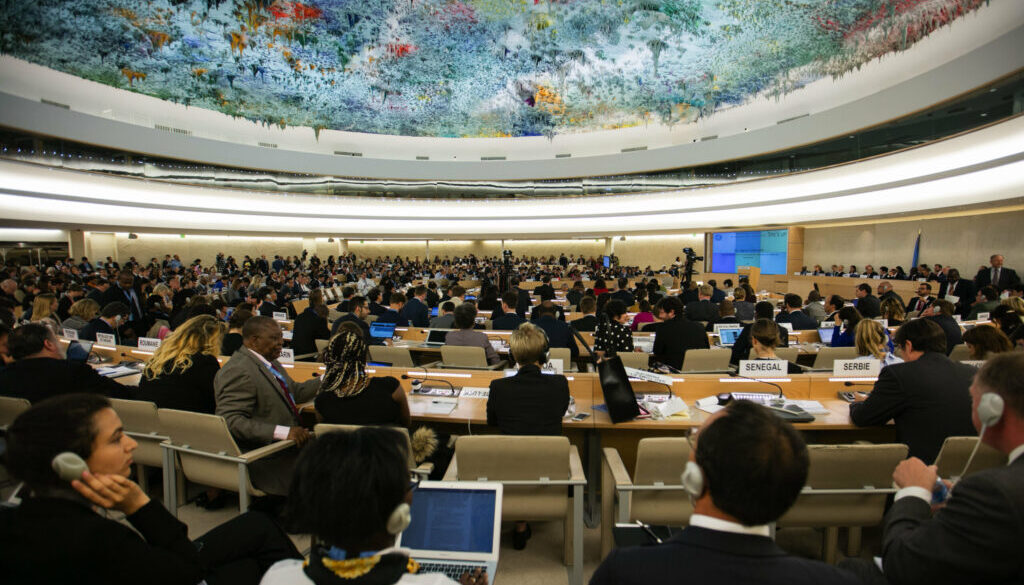
At the 18th Session of the Expert Mechanism on the Rights of Indigenous Peoples (EMRIP), Norway, a country often seen as a progressive leader on environmental rights, took the floor to correct what it described as a misrepresentation of its domestic legal practices. Specifically, the government contested a statement in an EMRIP advisory note, which claimed that licenses for extractive or infrastructure projects (such as wind parks, mining, and roads) were sometimes granted before meaningful consultation or impact assessments with affected Indigenous communities had taken place.
Norway’s response was categorical: “This is not correct, nor does it reflect how the system works in Norway.” According to its official statement, the country asserts that free, prior, and informed consent (FPIC) is embedded early in licensing processes, alongside cultural, environmental, and socio-economic assessments.
While this may appear as a technical correction in an international forum, the implications go much deeper, especially for environmental defenders and Indigenous communities in the Global South.
The North’s double standard?
Norway’s pushback raises critical questions about how FPIC is understood, practiced, and promoted globally. As a country that often funds development projects abroad and actively shapes international norms on sustainability and Indigenous rights, Norway’s domestic approach serves as both a benchmark and a reference for others. But when the very mechanisms meant to protect rights-holders suggest gaps in implementation -and governments rush to dismiss them- it reveals a tension between rhetoric and reality.
For environmental defenders in Latin America, Africa, Asia, and beyond, this moment is telling. Communities in the South often face extractive projects backed (directly or indirectly) by actors from the North. These projects are frequently justified through legal frameworks or standards that supposedly follow best practices, including FPIC. But what happens when the example set by “progressive” countries is one of denial or defensiveness?
Why this matters for the global south
The struggle for environmental justice in the Global South is already marked by asymmetries of power, access, and voice. When states in the Global North are unwilling to accept critique from expert bodies -or even acknowledge potential flaws in how consent is implemented- they risk undermining the very standards they advocate abroad.
Moreover, Norway’s assertion that its system is functioning as it should, despite on-the-ground evidence and the advisory note’s concerns, reinforces the dangerous idea that good intentions and formal procedures are enough. For defenders facing criminalization, displacement, or violence, this technocratic vision of consent rings hollow.
A cautionary tale for consent
This episode is not merely about Norway. It is about how power operates within international human rights spaces, and whose voices are taken seriously. It is a reminder that FPIC is not a checklist or a legal safeguard to be ticked off: it is a living, negotiated process rooted in trust, dialogue, and community autonomy. True environmental democracy means holding all states accountable, not just those in the Global South.