
Human Rights Day: defending rights, tackling the structural drivers of climate change
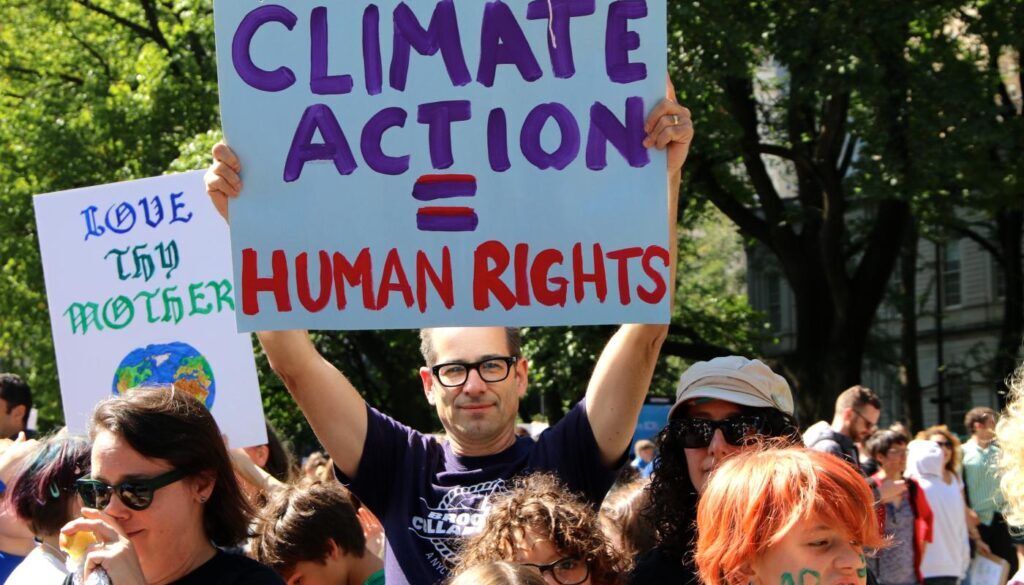
International Human Rights Day exposes how climate breakdown is not only an environmental crisis but a structural human rights emergency already reshaping lives and territories across the Global South. For Kallied, a community of practice rooted in the struggles of land and environmental defenders, this date is less a commemoration than a demand to move from acknowledging climate‑related harms to transforming the systems that produce them.
The report Promotion and protection of human rights in the context of climate change, prepared by the United Nations Special Rapporteur on human rights and climate change, Elisa Morguera, presents climate change as a present and escalating human rights crisis that directly undermines rights to life, health, food, water, housing and culture. It emphasizes that those who have contributed least to greenhouse gas emissions -often Indigenous Peoples, rural communities and low‑income groups in the Global South- bear the brunt of impacts while being excluded from climate decision‑making and access to remedies. The report links states’ human rights obligations to concrete duties such as rapidly phasing out fossil fuels, closing the loss and damage finance gap, and embedding participation, transparency and accountability in climate policies, while affirming that protecting Indigenous and environmental human rights defenders is a prerequisite for any legitimate climate response.
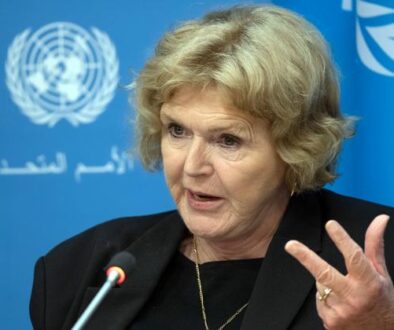
The report Tipping points: human rights defenders, climate change and a just transition, authored by the United Nations Special Rapporteur on the situation of human rights defenders, Mary Lawlor, deepens this picture by focusing on those who are defending land, water and territories against destructive projects and unjust transitions. It shows how defenders resisting fossil fuel expansion, deforestation, industrial agriculture or harmful “green” solutions face criminalization, smear campaigns, surveillance, digital attacks and lethal violence, often facilitated by corporate capture and weak rule of law. At the same time, the report insists that these defenders are essential to a just transition because they expose abuses, contribute scientific and traditional knowledge, and advance alternative development visions that respect both human rights and ecological limits; it warns that continued repression risks pushing societies past social and ecological tipping points where both critical ecosystems and the communities best placed to protect them are irreversibly damaged.
Taken together, the two reports portray climate change as a systemic human rights crisis that demands rights‑based mitigation, adaptation and finance, while placing land and environmental defenders at the center of just transition debates. Both stress that states must move beyond symbolic recognition: they must phase out fossil fuels, address loss and damage, guarantee meaningful participation for the communities most affected, prevent and punish attacks on defenders, dismantle patterns of criminalization, and create the political and legal conditions for defenders to shape climate policy safely. In this sense, the reports align strongly with an understanding of climate justice that begins from the lived realities of frontline communities rather than from abstract carbon metrics.
Kallied, as a Global South‑anchored community of practice bringing together action‑research projects at the intersection of environmentalism and human rights, works precisely on this terrain where international norms meet the concrete risks of defending territories. From Brazil, Kenya and Mexico to the Philippines and Liberia, Kallied’s projects respond to online and offline attacks, amplify participation in environmental and climate governance, and weave cross‑regional solidarity and evidence among land and environmental defenders. The insistence in the UN reports on fossil fuel phase‑out, loss and damage and protection of defenders directly echoes the daily struggles of Kallied partners confronting extractive projects whose impacts are felt as dispossession, contamination and cultural erasure rather than distant climate indicators.
At the same time, experience from Kallied’s projects brings additional layers that are crucial to advancing real change. Building on the reports’ emphasis on participation, these projects foreground how knowledge hierarchies marginalize community‑generated evidence and digital testimony, and respond by co‑producing research with defenders and grounding analysis in their lived experience. They also place at the center the specific dynamics of online harassment, disinformation campaigns and corporate platform governance -core to Kallied’s work on coordinated digital attacks- which are increasingly shaping violence and shrinking participation. Defenders engaged with Kallied further emphasize care, healing and collective security as political strategies rather than merely technical protection tools, and highlight South-South alliances and community‑led narratives that challenge colonial patterns in climate finance, philanthropy and data governance, expanding and deepening the agendas set out in the UN reports.
On this Human Rights Day, the convergence of the mandates in these reports and Kallied’s daily work creates a commitment to take action. This means turning strong human rights language on climate justice and defender protection into concrete shifts in law, policy, funding, and corporate behavior. These shifts should be guided by the strategies that communities are already using to resist and reimagine their futures. The responsibility is to ensure that the «just transition» narrative does not extract from defenders’ struggles while leaving the structures that endanger them intact. As a Global South-driven community of practice, Kallied’s proposition is to continue creating spaces where land and environmental defenders, Indigenous peoples and local communities are recognized as co-authors of climate-just futures. These spaces allow defenders to shape knowledge agendas, define priorities for protection, and set the terms of justice in their own territories.