
At the tipping point: Protecting human rights defenders in the age of climate crisis
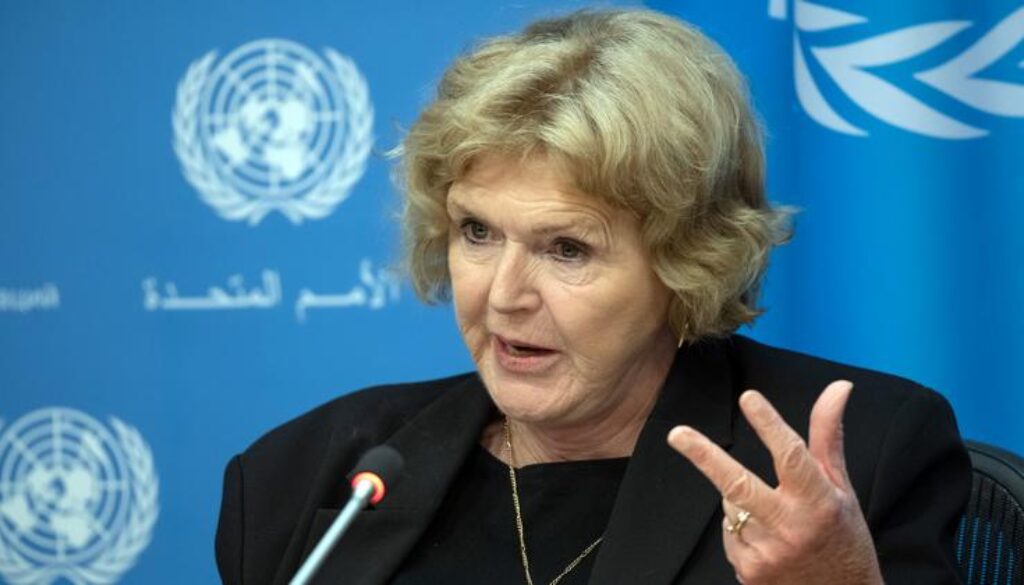
In her most recent report to the UN General Assembly, Tipping Points: Human Rights Defenders, Climate Change and a Just Transition, the UN Special Rapporteur on the situation of human rights defenders, Mary Lawlor, delivers an urgent message: the world is failing those who are doing the most to secure a livable planet. Despite growing global awareness of climate breakdown, governments and corporations are intensifying repression against the very people demanding accountability and justice.
Climate change as a human rights crisis
Lawlor begins with a clear assertion: climate change is not only an environmental issue, it is a human rights crisis. Rising temperatures, deforestation, and pollution are already undermining rights to food, water, health, housing, and life itself. More than 3 billion people live in areas highly vulnerable to climate impacts, many of them in regions already marked by inequality and exploitation.
Yet while the Paris Agreement obliges States to integrate human rights into their climate actions, Lawlor finds that few are meeting this duty. Instead of supporting defenders, many governments are silencing them. As she notes, “a strong trend, damningly, is towards obstruction, repression and criminalization aimed at safeguarding private interests and the unjust, unsustainable status quo.”
Defending rights, defending the planet
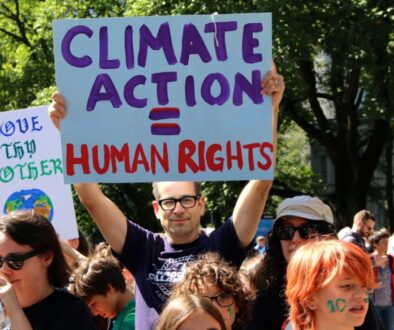
The report documents how defenders across the world (Indigenous leaders, youth activists, women’s groups, farmers, and lawyers) are advancing climate justice, often at great personal risk. They plant trees, restore ecosystems, pursue strategic litigation, and challenge governments and corporations that perpetuate extraction and inequality.
Examples from around the globe show both courage and creativity. In Brazil, the Landless Rural Workers Movement (MST) has already planted more than 25 million trees as part of its plan for people-led agrarian reform. In Colombia, the Guardians of the Atrato River won legal personhood for their river, establishing a precedent for environmental justice. Dalit women in India are leading climate-resilient farming practices rooted in food sovereignty, while coastal communities in the Philippines are restoring mangroves to protect against stronger storms.
These initiatives prove that bottom-up solutions exist. Yet, as Lawlor emphasizes, they thrive despite States, not because of them.
Repression and criminalization
The report also provides a chilling account of how defenders are targeted worldwide. Peaceful protestors and community leaders face arrests, surveillance, smear campaigns, and even violence. In Uganda, at least 129 people were detained for opposing the East Africa Crude Oil Pipeline. In the United States, nearly a thousand were criminally charged for protesting the Line 3 pipeline, while in Vietnam, environmental lawyer Dang Dinh Bach remains imprisoned for his work on sustainable energy.
Across continents, new laws are being introduced to criminalize non-violent activism. In the United Kingdom, the 2023 Public Order Act created broad offences against protest tactics such as “locking on,” punishable by imprisonment. In Italy, activists can now face two years in prison for blocking roads, while some governments have labeled climate movements as “terrorist organizations.” This language of “ecoterrorism,” Lawlor warns, is being used to justify the erosion of civic space and dissent.
Litigation and resistance
Despite these threats, defenders continue to use legal systems to demand accountability. Landmark cases such as Verein KlimaSeniorinnen Schweiz v. Switzerland before the European Court of Human Rights and Held v. Montana in the U.S. demonstrate the power of litigation to link climate inaction with human rights violations. Indigenous communities in South Africa, Colombia, and Ecuador have also achieved historic wins against extractive projects and government neglect.
However, the victories are fragile. Lawlor documents how governments frequently ignore court rulings or pass new laws to undermine them. True accountability, she argues, will require sustained international pressure and solidarity.
Toward a just transition
Lawlor’s report goes beyond condemnation. It outlines what a just transition should look like: one grounded in human rights, equality, and participation. Indigenous Peoples and local communities must be full partners in designing the shift to renewable energy. This includes ensuring free, prior, and informed consent, protecting defenders from reprisals, and addressing the structural injustices that drive the climate crisis.
Good practices do exist: Sierra Leone’s 2022 land reforms strengthened communal land rights through participatory processes, while some renewable energy companies have begun adopting human rights defender policies. But these are the exceptions, not the norm.
The call for COP30 and beyond
With COP30 approaching in Belém, Brazil, Lawlor’s report resonates powerfully. It is a call to place human rights defenders at the center of climate governance. Without their participation, there can be no transparency, accountability, or justice in the transition ahead.
As Lawlor reminds the international community, “There is no authoritarian solution to the challenges posed by climate change.” Sustainable transformation requires protecting those who speak truth to power.
The defense of life on Earth and the defense of human rights are inseparable. Ensuring space for defenders is not only a moral obligation, it is humanity’s best hope at the tipping point.