
A legal turning point: the International Court of Justice declares States must act on climate change
In a historic move that strengthens the legal foundations of climate justice, the International Court of Justice (ICJ) has issued an advisory opinion declaring that all States have a legal duty under international law to prevent climate change and protect the global climate system. Described by UN Secretary-General António Guterres as a “victory for our planet,” the opinion represents a major milestone for international environmental law, and a powerful moment for frontline communities across the Global South.
A clear message: climate change is a legal and moral emergency
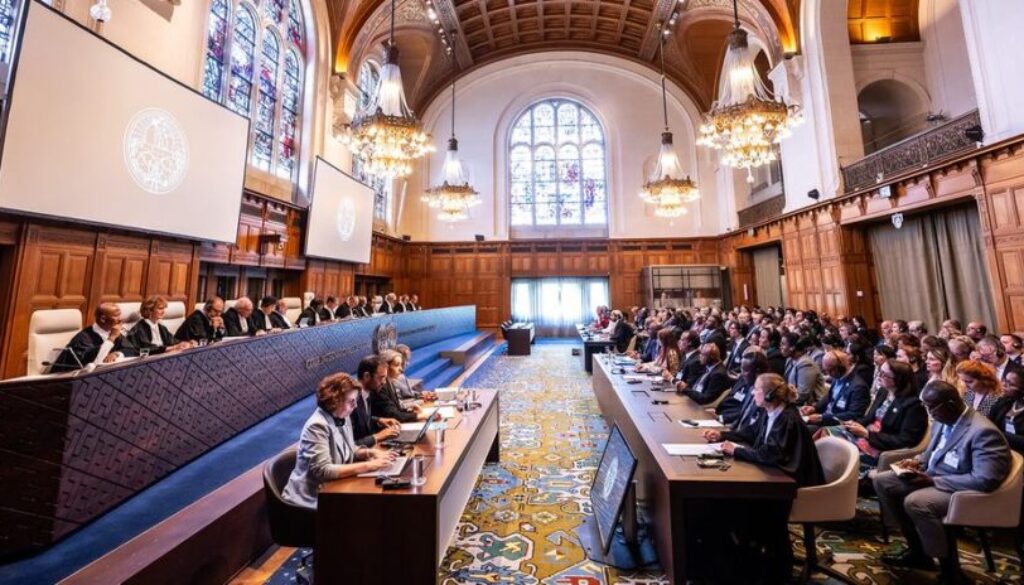
Delivered on July 23, 2025, the advisory opinion concludes that climate change constitutes a “universal existential threat” unequivocally caused by human activity. According to ICJ President Yuji Iwasawa, greenhouse gas emissions are crossing borders and having severe, wide-ranging impacts on both natural ecosystems and human societies. In this context, the Court affirms that States are not only politically but legally obligated to take action.
The Court emphasizes that States must act with “due diligence” to prevent significant harm to the environment. This includes using all available means to ensure that activities under their jurisdiction do not contribute to environmental degradation or harm the global climate system. The opinion goes further, stating that these obligations stem not only from treaties like the Paris Agreement, but also from customary international law, making them applicable to all States, regardless of whether they have signed on to specific climate accords.
Consequences for inaction
In one of the most significant sections of the opinion, the ICJ makes it clear that failing to meet these obligations amounts to an “internationally wrongful act.” States found responsible must cease harmful actions, offer guarantees of non-repetition, and provide full reparation to those harmed, including through restitution, compensation, or satisfaction.
This legal framing raises the stakes for countries and corporations whose emissions are driving the climate crisis. It also opens the door for affected States, particularly vulnerable island nations and developing countries in the Global South, to seek redress or raise climate justice claims in international forums.
No excuses for delay
Importantly, the Court rejects the notion that scientific uncertainty can be used to delay climate action. On the contrary, it underlines the urgency of taking “appropriate,” “consistent,” and “sustainable” measures to reduce emissions. States must act quickly, not at their own pace, and in good faith cooperation with one another.
This message directly challenges the status quo in international climate politics, where powerful countries often set the tempo and conditions for action. By insisting on legally binding duties and immediate, coordinated responses, the ICJ positions climate change not as a future risk, but as a current legal emergency.
A mandate for cooperation and support
The advisory opinion also affirms the duty of States to cooperate, especially in areas such as financing, technology transfer, and support for vulnerable countries. This provision reflects the calls of many Global South nations, which have long emphasized that climate justice must include solidarity, not just emissions cuts.
Small island developing States were central to this process. It was a coalition of Pacific youth and governments that first launched the campaign for this opinion in 2021. Their role is now recognized at the highest legal level: the ICJ explicitly refers to the disproportionate harm these communities face and the need to safeguard both current and future generations.
Implications for global litigation and policy
Although ICJ advisory opinions are not legally binding, they carry significant moral and legal authority. This particular opinion is expected to influence the growing wave of climate litigation, more than 3,000 legal cases are currently underway in over 60 countries.
National and international courts will likely refer to this opinion when evaluating the climate responsibilities of States, companies, and financial institutions. For activists, lawyers, and policymakers in the Global South, it provides a powerful tool to demand stronger climate action and accountability from both governments and global actors.
A new era for climate and energy
The Court’s decision arrives alongside encouraging news: global investment in clean energy surpassed fossil fuel funding in 2024. The UN Secretary-General hailed this shift as a sign that “the future of clean energy is now irreversible.” Guterres called on all nations to accelerate the transition to renewables, highlighting their role in economic development, job creation, and energy security.
“Clean energy doesn’t just fight climate change, it builds stable, autonomous, and resilient societies,” he said.
Conclusion: a powerful step forward for the Global South
For communities in the Global South, many of whom have contributed least to the climate crisis yet bear its heaviest burdens, this advisory opinion represents a powerful legal and moral lever. It affirms their right to protection, redress, and meaningful participation in shaping climate responses. By recognizing climate change as a legal emergency and reinforcing obligations grounded in international law, the ICJ has opened new avenues for accountability and global solidarity. This is not only a turning point for climate governance, it is a long-awaited step toward justice for those on the frontlines.